Cold press juicers: slow augers for greens, celery and juice that keeps
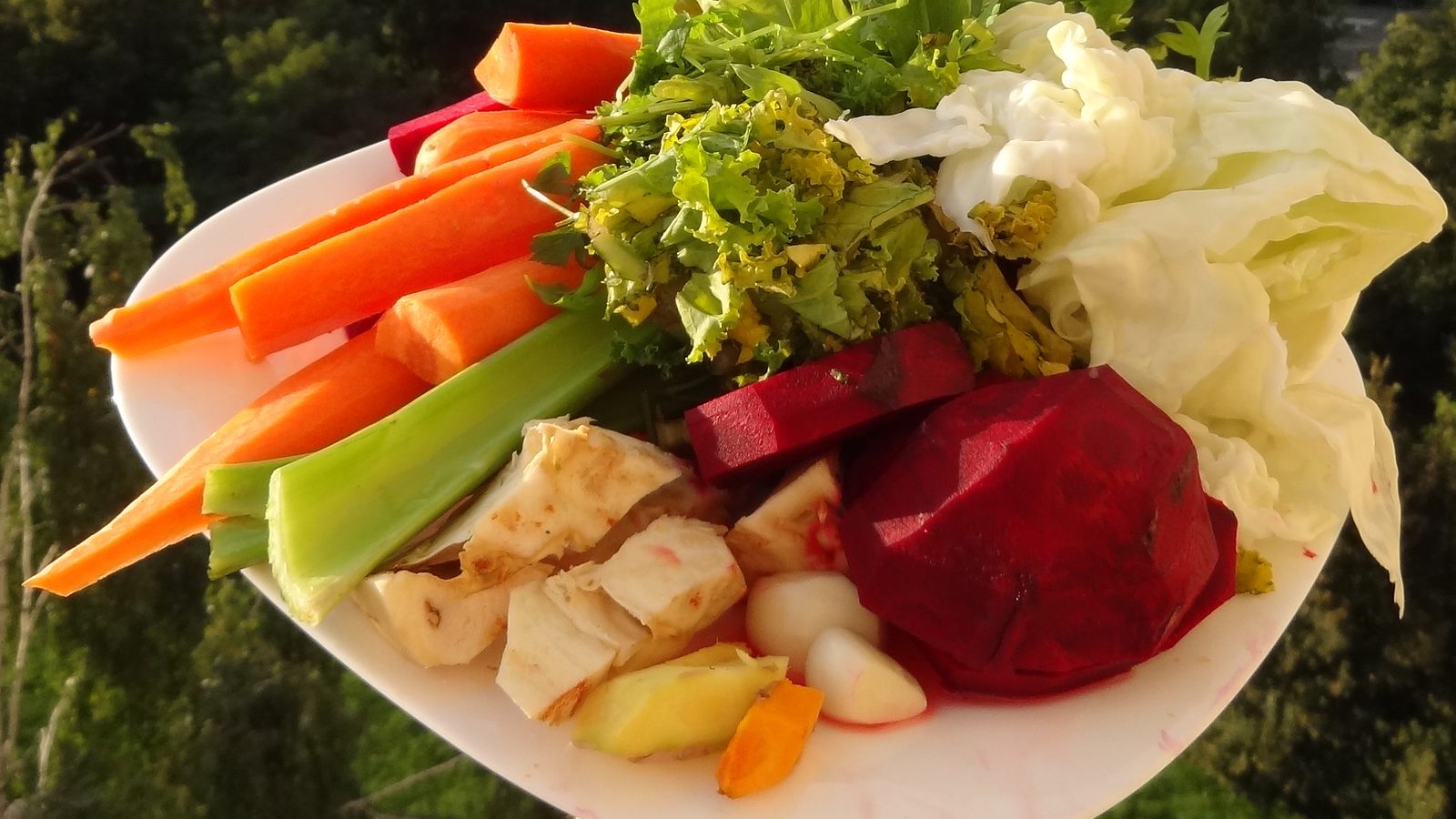
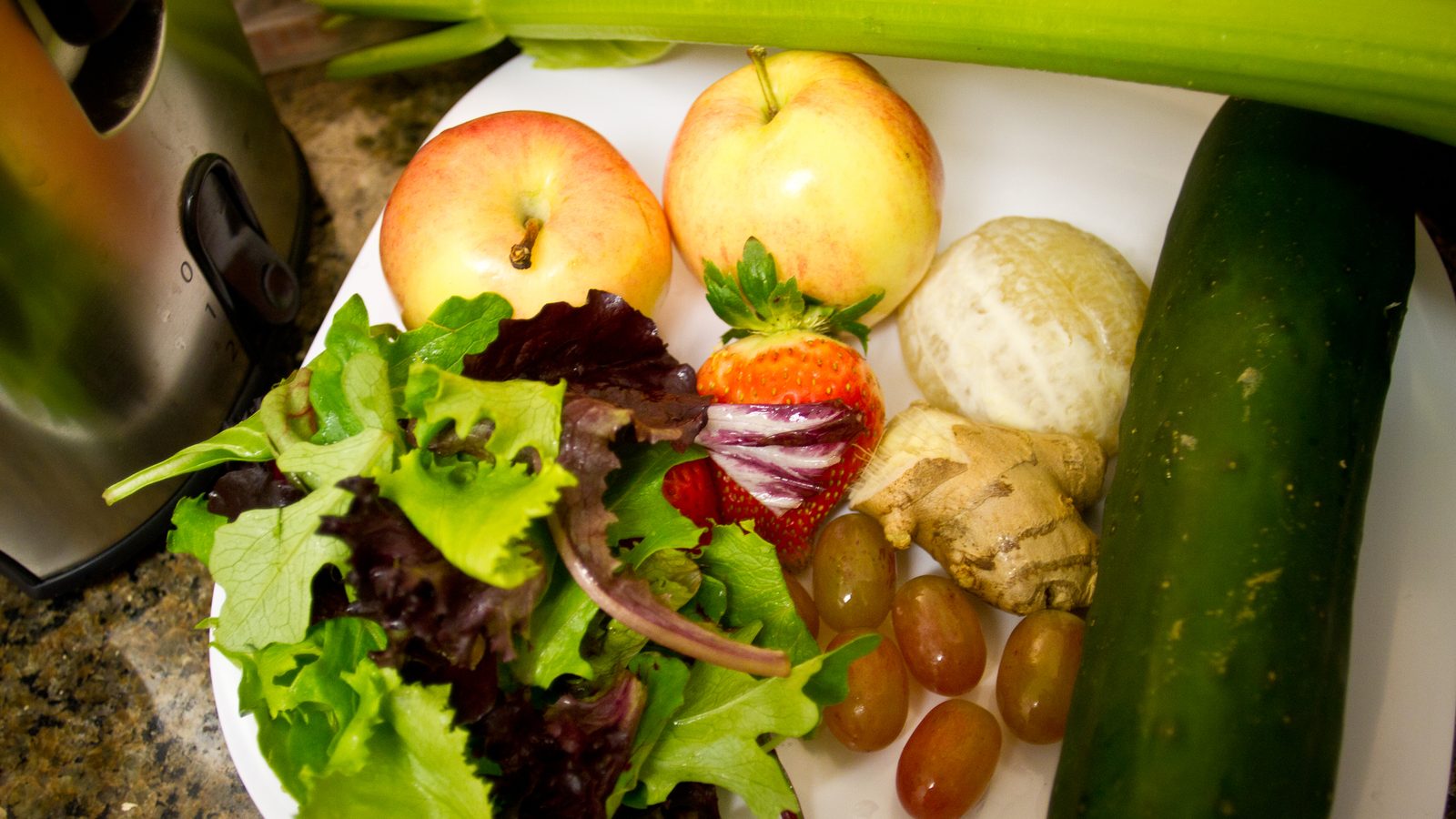
A cold press juicer turns an auger slowly, 50 to 80 revolutions a minute, and squeezes the produce against a screen instead of shredding it. The juice has less foam and keeps a day or two in the fridge, while the pulp comes out drier. Slow pressing is suited to kale, spinach and celery. The cost is time and parts: feeding, and then washing. The hopper machines fix the first; the no-mesh chambers soften the second.
Four shapes of slow juicer
These machines extract juice by pressing produce. The shape decides what you feed and what you wash. Cold press vs centrifugal has the long version of why slow matters.
Hopper on top
Self-feeding verticals
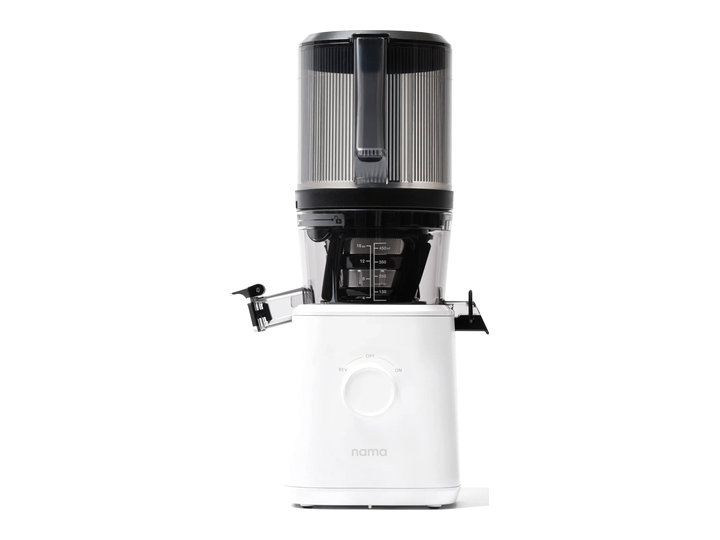
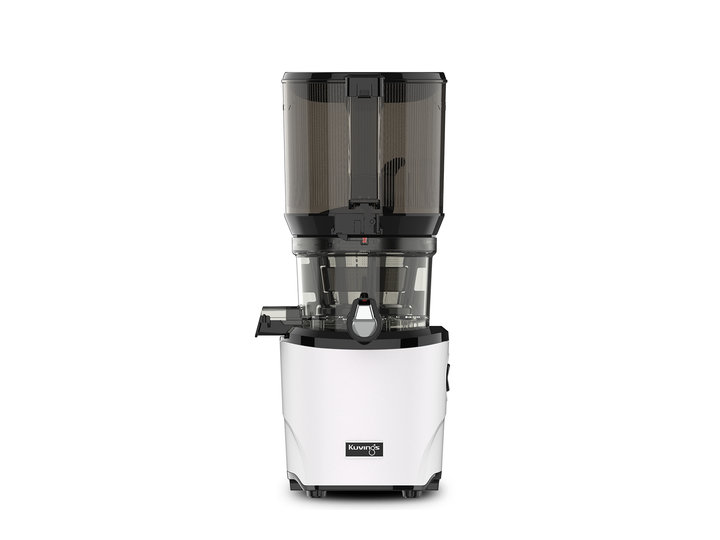
Nama J2, Hurom H400 and H70, Kuvings AUTO10. A lidded hopper takes whole or roughly cut produce and the auger pulls it down on its own. The feeding chore disappears; you still wash the chamber.
Chute on top
Vertical with a chute
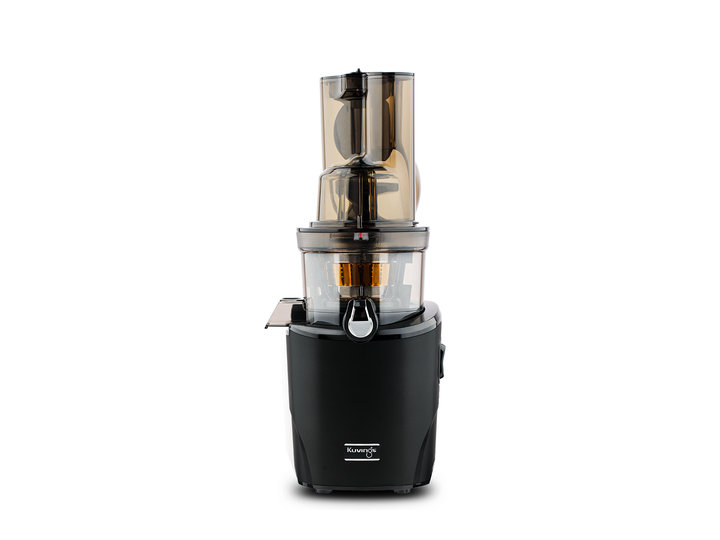
Kuvings REVO830, nutribullet, Ninja. You feed piece by piece down a chute; wide chutes (3 to 3.5 in) take a whole apple, narrow ones mean a knife. These machines offer slow pressing in a smaller body and usually cost less than hopper models.
Auger on its side
Horizontal augers
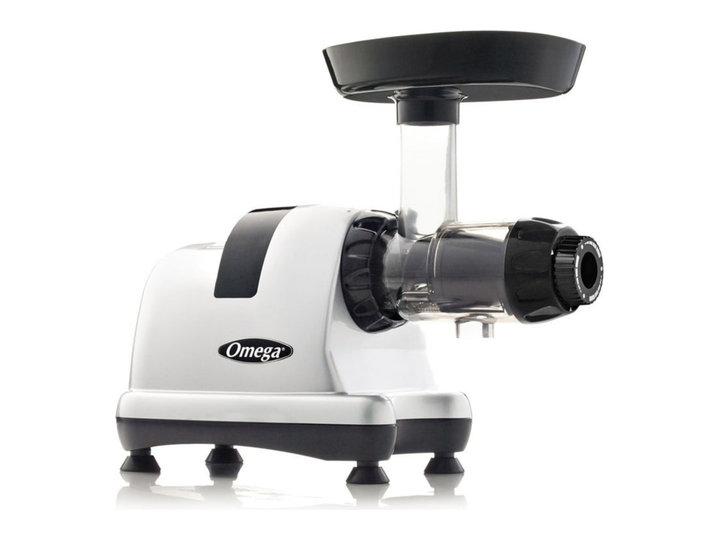
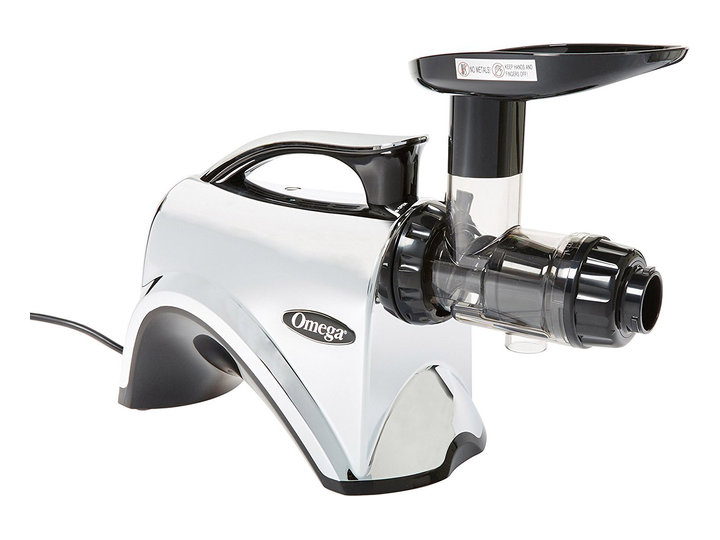
Omega NC900HDC and MM900HDS. A narrow chute and a long auger that excels at celery, wheatgrass and leafy greens, and takes attachments for nut butter, pasta and sorbet. Slow with apples.
Two gears
Twin gear
Tribest Greenstar. Produce is crushed between two interlocking gears and pressed in stages: the highest yield from greens, the most parts, the most patience.
Quick picks
The short answer for common situations. Each links to the full card below.
Under 8 lb, two pulp filters, reverse, dishwasher-safe parts.
Compare the ten
Speed, feeding and chamber from each maker's page where it publishes one; Omega, Tribest and the budget augers show the listing's figures and say so. The Greens column describes how each machine handles leafy produce, based on its mechanism and the maker’s information.
Product links on this page go to Amazon. If you buy through them, Upgrade My Juicer earns a commission. How we pick and earn
The juicer that changed the chore: a lidded hopper takes a whole recipe at once, cuts and feeds it on its own at 50 rpm, and lets you walk away. Nama says the J2 yields up to 60 percent more juice than a high-speed juicer from the same produce, and that each part needs only a light scrub.
Speed
50 rpm, 200 W
Feeding
Self-feeding hopper with lid; load the recipe and walk away
Juice
Juice and pulp containers, coarse and fine strainers included
Cleaning
Light scrub, soap and water; brush included; hand wash (listing)
Size
9 × 9.8 × 17.7 in; 12.1 lb (listing)
Materials
Tritan chamber, stainless strainer (listing)
Suits: Daily green juice or family batches, especially when feeding and cleanup have made juicing a chore.
Weigh: The hopper is the point and the price. The J2 is tall at 17.7 in, hand wash only, and like every slow juicer it is slower than a centrifugal machine for a single glass of apple juice.
Vertical slow juicer, self-feeding hopper, no mesh strainer
Hurom H400 Easy Clean
Hurom H400 Easy Clean Slow Juicer
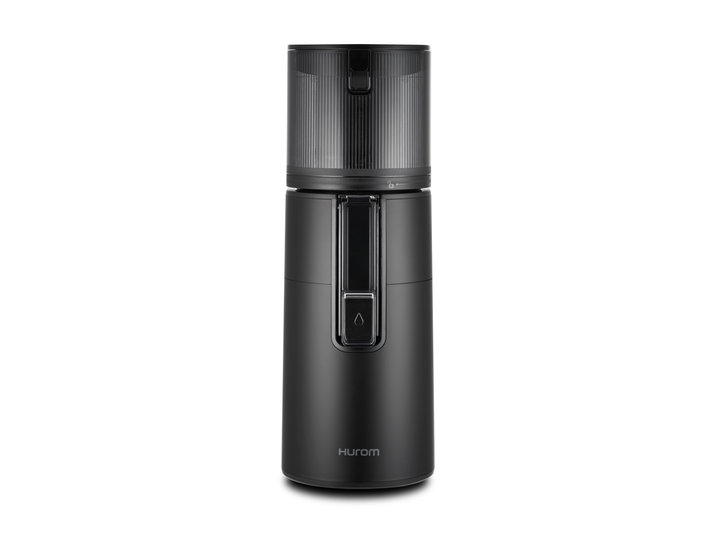
Hurom's answer to the J2: the largest self-feeding hopper Hurom has made, a wider inlet you can top up while it runs, and an Easy Clean chamber whose two-part auger strains the juice itself, so there is no fine mesh to scrub. A gauge window shows how full the chamber is.
Speed
150 W motor (listing)
Feeding
Self-feeding hopper, Hurom's largest, with an inlet for adding produce while running
Straining
Easy Clean chamber: two-part auger, no mesh strainer
Chamber
550 ml (18.6 oz) (listing)
Size
10.3 × 6.6 × 18.5 in (listing)
Cleaning
Parts separate; no scrubbing of a mesh; hand wash
Suits: Batch juicing for a household; the person who hates scrubbing a strainer more than anything else about juicing.
Weigh: Easy Clean chambers leave a little more pulp in the glass than a mesh strainer does; Hurom says the H400 has the least pulp of its Easy Clean models, which is not none. Hand wash.
Vertical slow juicer, compact, self-feeding hopper, no mesh strainer
Hurom H70 Easy Clean
Hurom H70 Easy Clean Slow Juicer
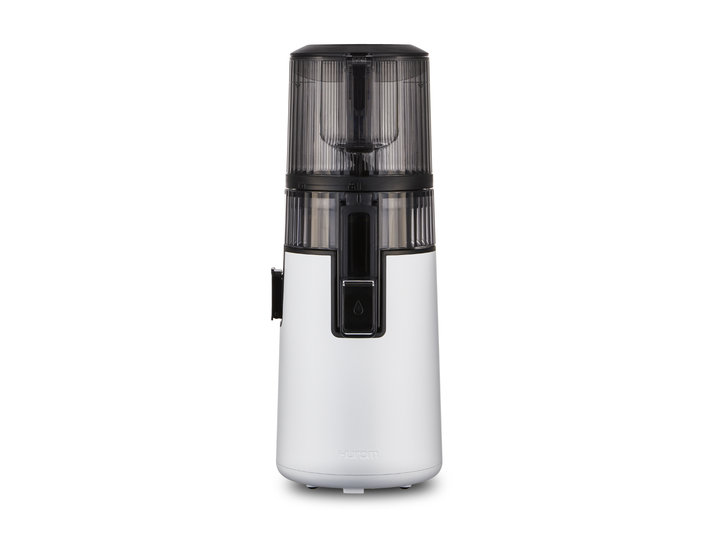
The H400's mechanism in a smaller body: Hurom places the H70 between its H310 and H400, with a large self-feeding hopper, a wider inlet, the same strainer-less Easy Clean chamber, and fewer parts to assemble.
Feeding
Self-feeding hopper with a wider inlet
Straining
Easy Clean chamber, no mesh strainer
Chamber
450 ml (15.2 oz) (listing)
Size
8 × 8 × 16 in (listing)
Assembly
Fewer parts than the H400, simplified internals
Cleaning
Parts separate; hand wash
Suits: A small kitchen that still wants a hopper and the no-mesh cleanup; one or two glasses at a time.
Weigh: Smaller chamber than the H400 (450 ml), so a family batch means emptying mid-run. Hand wash.
Vertical slow juicer, two chutes, auto-cutting auger
Kuvings REVO830
Kuvings Whole Slow Juicer REVO830
Two feed chutes instead of a hopper: an extra-large 3.5 in opening for apples, carrots, celery and beets, and a second one for long, fibrous produce, with an auger that cuts as it pulls so whole fruit goes in without pre-cutting. 50 rpm, 200 W, and Kuvings' 15-year assurance.
Speed
50 rpm, 200 W
Feeding
Two chutes: 3.5 in extra-large plus a narrow chute; auto-cutting auger
Extras
Smoothie strainer, sorbet and citrus attachments sold by Kuvings
Kuvings' self-feeding machine: load whole fruit and vegetables, a double-crushing blade cuts and feeds them, and a 240 W motor at 50 rpm runs up to 30 minutes continuously. The chamber holds about 100 oz (3 L), the largest batch of any juicer here.
Speed
50 rpm, 240 W; up to 30 min continuous
Feeding
Self-feeding hopper, auto-cut
Capacity
3,000 ml (about 100 oz)
Size
8 × 9 × 17.5 in (listing)
Warranty
15-year assurance (Kuvings)
Cleaning
Simplified parts, cleaning tools included; hand wash
Suits: Juicing for a whole household in one run; the person who wants a hopper and chose Kuvings over Nama and Hurom.
Weigh: The biggest and heaviest of the hopper juicers; make sure the counter and the cabinet height allow 17.5 in plus the lid. Hand wash.
Omega's horizontal auger with a second end cap made for celery only: it holds the stalks in the press longer for more juice and less wet pulp. 80 rpm, 200 W, and the nutrition-system attachments for nut butter, pasta, baby food and sorbet.
Speed
80 rpm, 200 W (listing)
End caps
Celery cap plus a standard adjustable cap
Pressing
Triple-stage masticating (listing)
Extras
Nut butter, pasta extruding, grinding, baby food, frozen desserts
Size
6.1 × 18.9 × 12.6 in; 14.3 lb (listing)
Cleaning
Dishwasher-safe parts (listing)
Suits: The daily celery juice people; leafy greens and wheatgrass, which horizontal augers handle better than verticals.
Weigh: Horizontal juicers have a narrow chute, so everything is cut to fit, and they are slow with soft fruit. The celery cap is for celery only; swap to the standard cap for everything else.
The long-running horizontal Omega: a dual-stage auger at 80 rpm, an end cap with five pressure settings, automatic pulp ejection for continuous runs, and the same attachments for nut butter, pasta, grinding and sorbet. Omega describes the gear reduction as equivalent to a 2 hp motor.
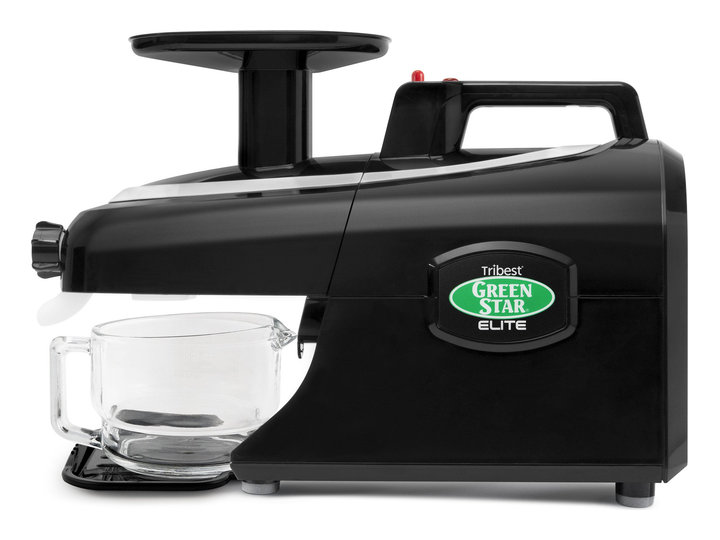
Two interlocking gears instead of one auger: produce is crushed and then pressed in three stages, which is why twin-gear machines are the reference for leafy greens and wheatgrass. 150 W, a pressure-adjusting outlet knob, and a locking mechanism Tribest redesigned for easier assembly.
Mechanism
Twin gears, three-stage juicing
Power
150 W (listing)
Outlet
Adjusting knob controls pressure
Size
6.8 × 18.6 × 12.4 in; 17.2 lb (listing)
Finish
Black (GSE-5010); white is GSE-5000
Cleaning
Dishwasher-safe parts (listing)
Suits: Greens-heavy juicing, wheatgrass, and anyone who treats yield as the number that matters.
Weigh: The narrow chute requires cutting produce to fit and feeding it steadily. It has more parts to wash than a vertical, which adds work for a simple glass of apple juice.
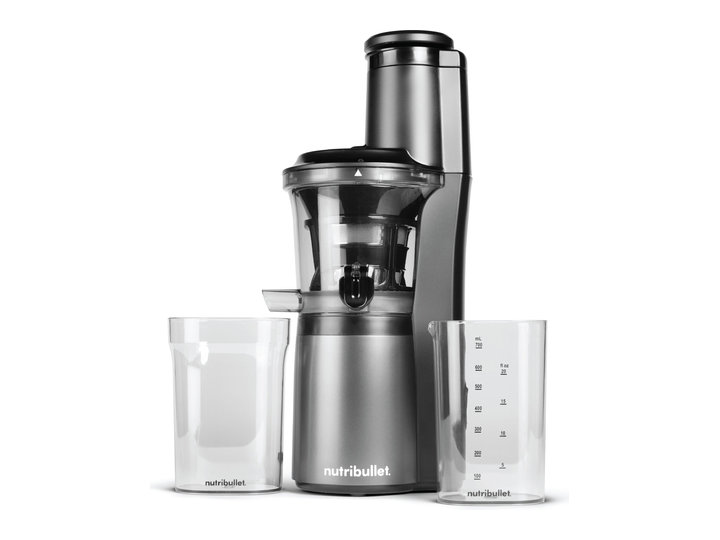
A compact vertical auger with a 3 in chute, a steel-tipped auger and a stainless sieve, spinning at 65 rpm. nutribullet says the spout does not drip and the components are dishwasher-safe, which is rare among slow juicers.
Speed
65 rpm, 150 W (listing)
Chute
3 in
Juice
710 ml container (listing)
Size
7 × 6.25 × 17 in; 11 lb (listing)
Warranty
1 year (nutribullet)
Cleaning
Dishwasher-safe components (nutribullet)
Suits: A first cold press for someone making a single glass, with limited counter space and a smaller budget.
Weigh: You feed produce piece by piece and brush the mesh sieve after use. nutribullet provides a one-year warranty.
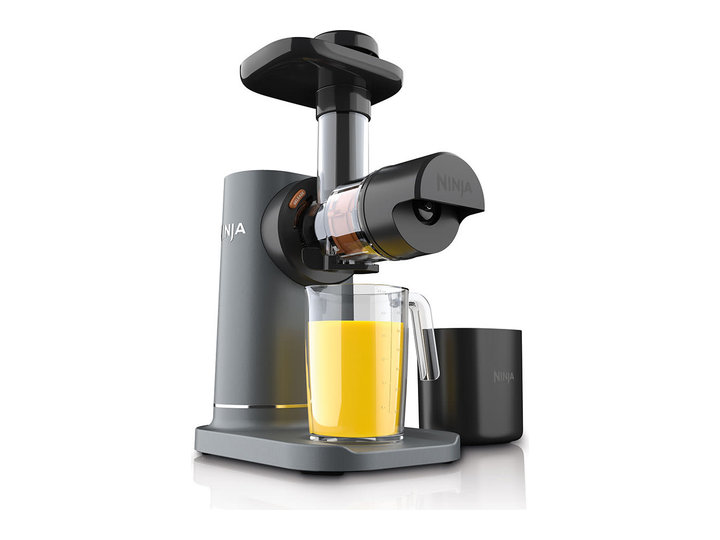
Ninja's small cold press: a 150 W high-torque motor, two interchangeable pulp filters (less pulp or lots of pulp), a reverse button for jams, a 24 oz jug and a 36 oz pulp container. Ninja lists it at under 8 lb with dishwasher-safe juice-contact parts and a one-year warranty.
Power
150 W, 120 V
Filters
Two: less pulp, lots of pulp
Controls
Start/Stop and Reverse
Containers
24 oz juice jug, 36 oz pulp
Size
12.11 × 7.15 × 15.93 in; 7.94 lb
Warranty
1 year (Ninja); dishwasher-safe parts
Suits: A first slow juicer, an apartment counter, and anyone who wants to choose the pulp level without a strainer swap.
Weigh: Small chute and no hopper, so prep is a knife job; capacity is one or two glasses. Entry-level build.
Every slow-juicer maker publishes a yield claim against "high-speed" or "traditional" juicers: Nama says up to 60 percent more juice from the same produce, Hurom and Kuvings make similar statements. The direction is right and the size depends on the produce: the gap is large with leafy greens and celery, small with apples and oranges. Chef'n and the citrus makers make yield claims against hand squeezers in the same spirit. None of them are lab figures and we don't treat them as such.
The claims that are checkable are on the spec sheets: auger speed, chute width, hopper capacity, chamber volume, which parts go in the dishwasher, and the warranty. Those are what the cards above quote, with the source named.